Terrarium Origins & Background
Shades of emerald and aquamarine filled my single dorm room, curling from shelves and scaffolds into every corner. Two grow lights cast their vibrant glow over succulents, vines, and jars of water plants, while the Kentucky sun spilled across a large window sill. Visitors and friends often called it a 'terrarium of life,' a small room transformed into an ecosystem where over forty plants thrived in layered conversation with light and soil. In essence, my 2021 college days were brimming with life, the botany kind. Here I will briefly document this story.
During 2019 and 2020, I worked in Vermont as a Compost Quality Assistant, where I learned to test soil and monitor decomposition as part of a wider farm system. In my early Berea College years, I split time between the animal farm and the horticulture farm, most often indoors transplanting seedlings or preparing winter crops. As an enthusiastic hobbyist, I procured and utilized tools for gardening. I am not, nor do I claim to be, an expert in botany; however, I found it beneficial to research vermiculture and soil science. Researching guides me toward practical tools such as soil pH and moisture testers, along with study of macronutrients in soils.
Manual labor is required for these roles, composed of sweat and dirt. Experiences such as these shape how I see plants: as collaborators, teachers, and sometimes stubborn survivors. To frost, to rain, to dry heat, plants bloom everywhere. From 2024 onward, life shifted west into a desert climate, where I now experiment with indoor adaptations in a place far less forgiving than Kentucky.
Living Lessons in Flora
African Milk Tree Cactus (Euphorbia trigona)
Honei, whose upright stems reached upward in striking ridges, was a specimen I once cared for. Native to Central Africa, particularly Cameroon and the Congo, the African Milk Tree is both resilient and formidable. Honei's most memorable trait is its toxic, thick, latex-like substance. Its milky sap oozes when the plant is cut or bruised, earning it the reputation of a plant that bleeds.
I placed Honei in the enclosure of my Madagascar Hissing Cockroaches. The pairing was symbolic more than scientific, a meeting of creatures and flora both known for their survival in unlikely environments. The cactus stood as a sentinel, its sharp silhouette a reminder that not all beauty is soft. Visitors often marveled at its presence, caught between caution and curiosity.
Knowledge Seed: The African Milk Tree unsettles expectations. People often imagine indoor exotics as flytraps or orchids, but this cactus teaches something different: that resilience can be elegant, and that plants carry their own forms of defense and warning. To care for it is to respect its boundaries as much as its form.
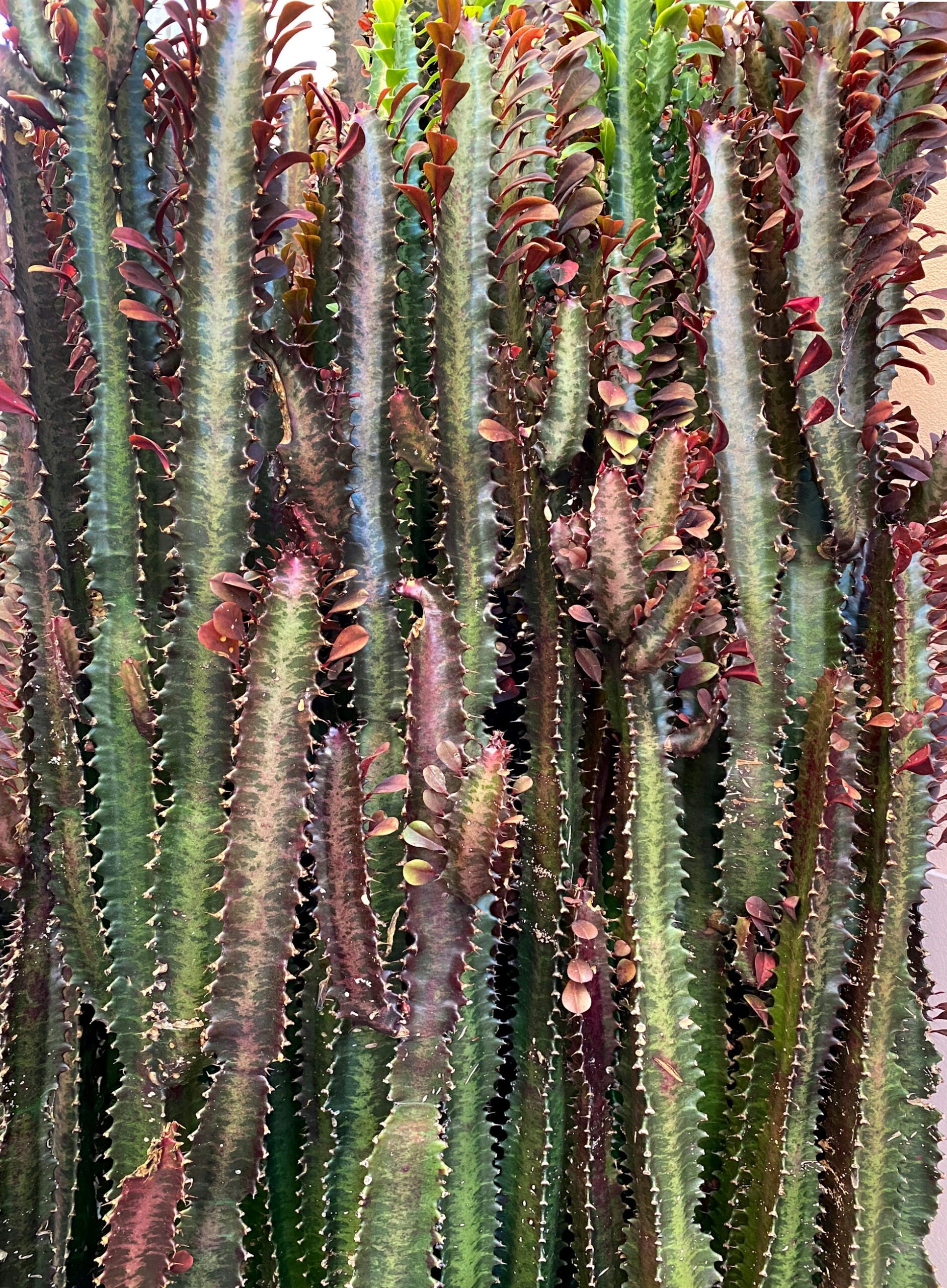
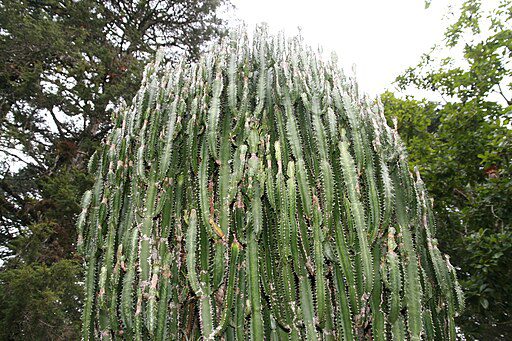
Photo by Jannet Serhan on Unsplash.
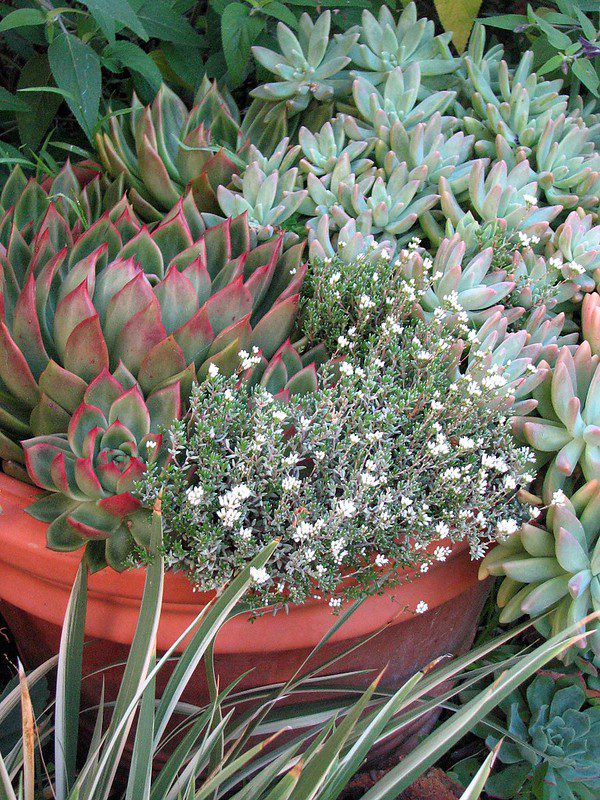
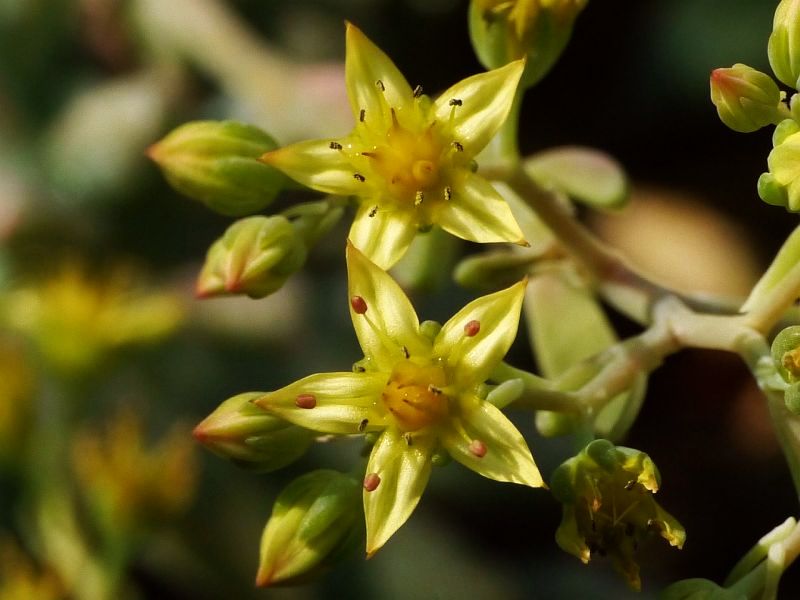
Succulent Hybrid (× Graptosedum 'Francesco Baldi')
Sedums, sedums, sedums, they seem to be everywhere. Sedums belong to the Crassulaceae family, a wide-ranging genus of succulents with squishy, water-storing leaves that can look wildly different depending on the variety. Graptosedum 'Francesco Baldi' is a hybrid, the result of crossing two succulent parents. I named it after myself, Malaya, and the bond was more than symbolic. Its leaves shifted in hue with the seasons, sometimes glowing purple, sometimes pink, and it even flowered, a show of resilience in a transient life. This plant moved with me through three different dorms, clinging on despite inconsistent light and my chaotic schedule. Unlike the houseplants people expect, this succulent carried its own quiet beauty, understated yet enduring.
Knowledge Seed: Succulents often live in the shadow of more popular indoor plants, dismissed as common or unremarkable. Yet my Francesco Baldi hybrid proved otherwise. It reminded me that resilience can bloom into elegance, and that beauty can persist in unlikely places when given time and attention.
Aquatic Plants — Marimo Moss Balls (Aegagropila linnaei)
Like every botanist loves to remind you, Marimo Moss Balls are not moss at all. They're a slow-forming green algae that gathers itself into soft spheres over many years. I cared for them before I ever tried Tiger Lotus bulbs (Nymphaea lotus) or true bamboo (Bambusoideae), keeping them first in jars and later in an aquarium. Their appeal was their simplicity. A small ball of algae, alive and steady, rolling gently in the water. In aquariums they are often overlooked compared to colorful fish or flowering aquatic plants. Yet they are living proof of how biodiverse the plant world is when you include aquatic biomes alongside land-based gardens.
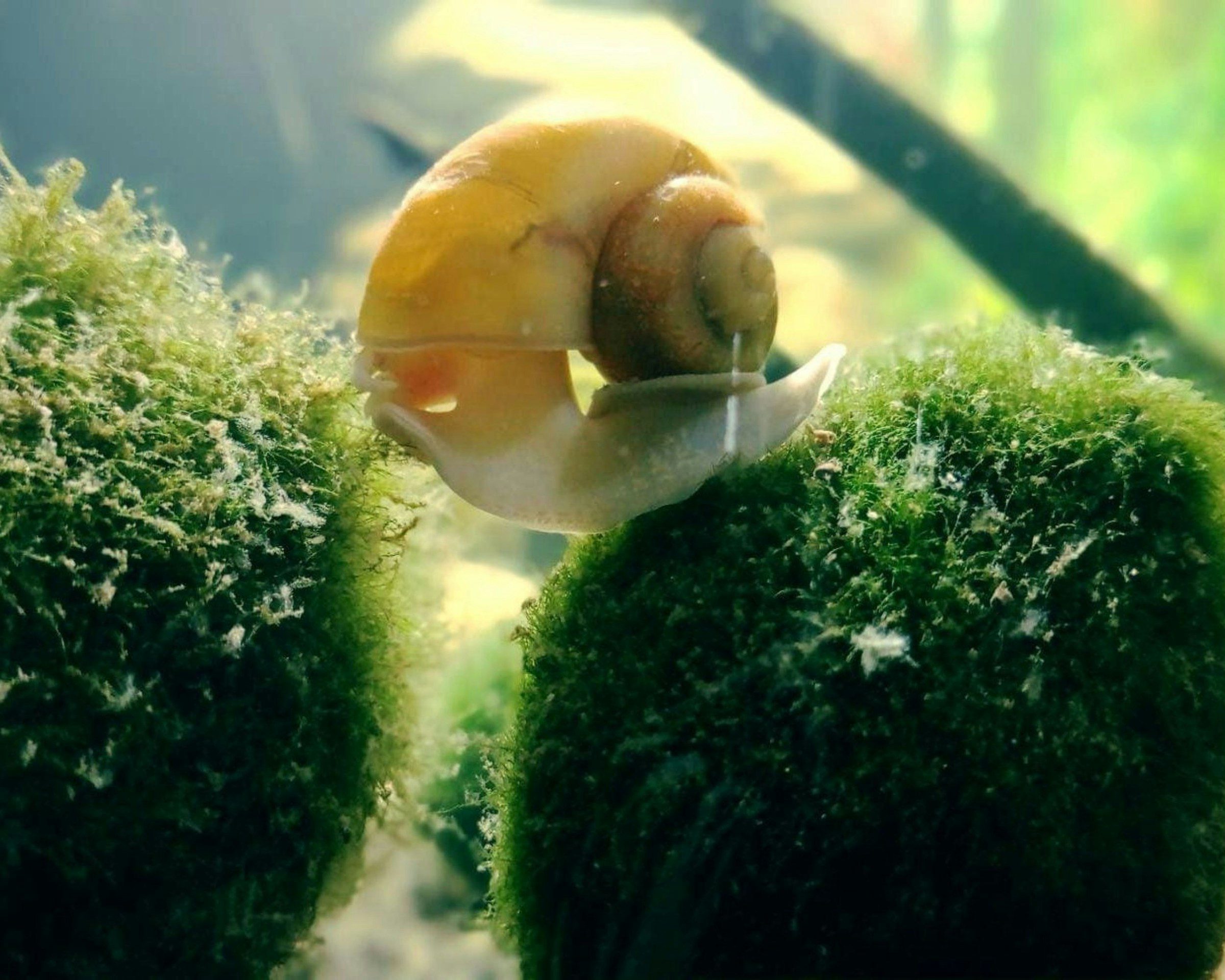
I kept mine for over a year and a half. When I added them to a tropical fish tank, the quality began to decline. The fish nibbled on them and the pH balance was not forgiving. Still, the algae persisted. I remember watching a snail glide across one, leaving a faint trail, as if the algae ball itself were part of the slow rhythm of the tank. That experience reminded me that plant care underwater comes with a different set of challenges: chemistry, symbiosis, and the invisible work of balance.
Knowledge Seed: Aquatic plants often live in the margins of botany writing, overshadowed by their terrestrial cousins. Moss balls, lotus, and bamboo testify to another biome where plants adapt to currents and creatures. To tend them is to acknowledge that biodiversity means more than soil and sun; it also means water, algae, and the overlooked.


Tomato Plant "Cro" (Solanum lycopersicum)
Cro was the name I gave to a tomato plant I grew indoors, an experiment stretching the limits of what's possible outside a greenhouse. The plant reached close to three feet tall under my care, a height unusual for an indoor crop. As Cro grew, I learned that fertilization and ecological helpers, often dismissed as pests, are essential for crops to thrive. Without those natural partners indoors, fruiting slowed and growth plateaued.
One of my most vivid memories comes from my time on the horticulture farm, transplanting over a hundred tomato seedlings in a single day. The manager reminded me to be careful not to pinch the stems or harm the fragile roots. That lesson stayed with me as I nurtured Cro in my dorm, always cautious and always learning. I also remember the humor in constantly asking the farm for extra soil to keep up with my experiments, soil that I enriched with vermiculture at home.
Knowledge Seed: Cro embodied persistence. Growing it indoors showed both the possibility of coaxing a crop into maturity under artificial conditions and the limits that appear without pollinators or proper fertilization. The lesson was that plants, like people, rely on community—visible or invisible—to reach their full potential.
[No image for Cro - I don't have photos from this period, and I don't want to use someone else's plant photos to represent my own work.]
Closing Reflections
During my lifetime of caring for organisms, from mammals to herbs, from succulents to carnivorous plants, I have learned that each plant carries a world of its own. Snow can crack open to reveal green shoots pushing upward. Damp greenhouses fill with condensation on glass while kale leaves glisten in the warmth. Rain-soaked fields bring forward dandelions with bitter greens or wild strawberries bright against wet soil. In dry heat, a basil pot under grow lights can still carry life, proof that survival takes many forms.
I remain a hobbyist and an experimenter, not an authority. My journey has moved from Vermont to Berea to the western desert, but the thread is always care. Caring for plants is not about expertise; it is about companionship and curiosity, valuing them not only for food or beauty but as collaborators in the wider ecology. Every plant is sacred to its ecosystem, from those we eat to those we ignore. When one looks closely at the Earth's flora, the web of life across biomes becomes visible.